Synopsys and Ansys power the future of innovation—connecting silicon to systems.


 EDA
EDA
 System
 IP
IP
 SolvNetPlus
 Training & Education
Ireland Gender Pay Difference Results
Men and Women representation per Pay Quartile
| Men | Women | |
| Upper Pay Quartile | 86.8% | 13.2% |
| Upper Middle Pay Quartile | 79.5% | 20.5% |
| Lower Middle Pay Quartile | 76.9% | 23.1% |
| Lower Pay Quartile | 59.0% | 41.0% |
Compared to men, women’s hourly pay rate is lower
| Mean | Median |
| 18.4% | 18.4% |
Percentage of men and women who received a bonus
| Men | Women |
| 85.5% | 89.5% |
Compared to men, women’s bonus pay is lower
| Mean | Median |
| 6.9% | 27.6% |
Understanding our Numbers
Executive Summary
Definitions
The difference in the average compensation of all men and all women across all roles. A pay gap usually is a result of more men occupying more senior and therefore higher paying—positions.
Commonly referred to as “equal pay for equal work,” this is an analysis of whether men and women are paid comparably for doing similar jobs, after controlling for legitimate differentiators such as performance and experience.
Pay Difference v. Pay Equity
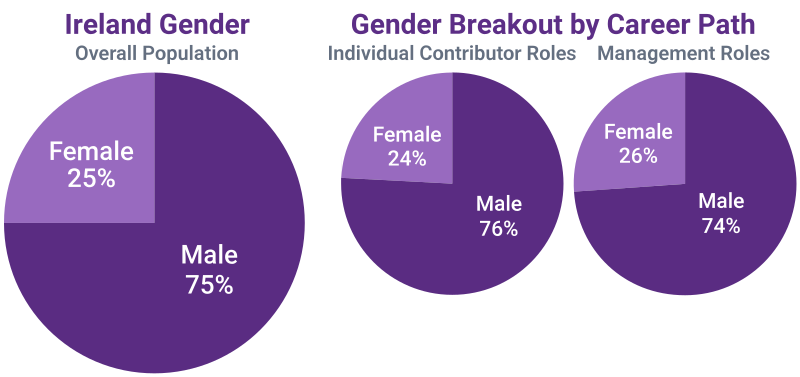
This Gender Pay Differences analysis highlights the variation in roles typically held by men and women, with men currently occupying a greater proportion of senior-level positions. As a result, the overall average pay for men is higher than that for women in Ireland.
It is important to note that this analysis does not assess Pay Equity, which examines whether individuals with comparable skills, experience, and performance are compensated comparably for performing similar work.
We remain confident that our compensation practices are fair and based on employees’ skills, expertise, and contributions—regardless of gender.
Representation and Pay
Ireland employees represent 0.7% of Synopsys’ global workforce for the reporting period.
This is our first year of reporting Gender Pay Results for Ireland.
Our data highlights ongoing challenges within the high-tech industry, particularly the gender imbalance in technical engineering roles, where men continue to be employed at significantly higher rates than women—especially at senior levels. This trend reflects broader labor market dynamics and the persistent gap in STEM education graduation rates, where fewer women than men pursue and complete STEM-related degrees.
In Ireland, technical engineering roles account for 83.9% of our total employee population in Ireland. Within this group, female representation stands at 16.9%, while male representation is 83.1%.
In contrast, other functions within our organization show stronger female representation:
- Finance: 71.4% female, 28.6% male
- Sales Enablement: 80% female, 20% male
- Workplace/Facilities: 67% female, 33% male
And equal representation within.
- Information Technology & Legal: both with 50% female, 50% male
Receipt of Bonus
In this initial reporting year, over 85.5% of both male and female employees received a bonus. Notably, a higher proportion of female employees—89.5%—received bonus remuneration.
Benefits in Kind
In this initial reporting year, over 94% of both male and female employees received a Benefits in Kind. Notably, a higher proportion of female employees—97.4% received Benefits in Kind.